
Key features
Let’s Listen and Talk is not a typical distance learning programme. Whilst some
of it is web-based and where possible we try to communicate electronically,
the detailed support we provide is personal and carefully tailored to your
individual family’s needs and those of your child.
What are the key features of the programme?
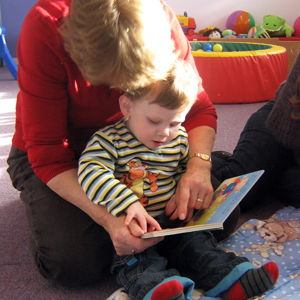
We know from our many years working with children and families at The Elizabeth Foundation that babies and young children learn best from the people they love, feel secure and spend the most time with.
Let’s Listen and Talk recognises that families are the best educators of their children, but that these families need specialist, friendly advice and support, especially when their children are very young. We know that it’s all about teamwork – and we are here to help!
Key features
Our Let’s Listen and Talk programme has the following key features.
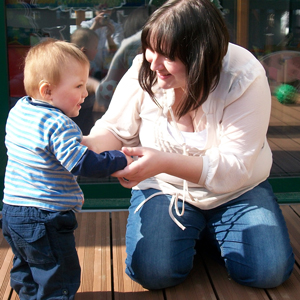
By following the Let’s Listen and Talk online home lesson plans in our courses you will use natural play and daily routines at home to develop your child’s listening skills, their understanding skills (their receptive language) and their spoken communication skills (their expressive language).
We have designed the home lesson plans so they use common and easy-to-find toys and household items. They include examples of activities to promote your child’s listening and speaking, and video clips to show how you should carry them out.
Much of the content and many of the activities in the lesson plans are based on the techniques our Teachers of the Deaf use in our classrooms, and on our successful and long-running print-based Home Learning Programme that has helped many hundreds of deaf children and their families since its launch in 1986. We developed parts of our original Home Learning Programme by adapting some elements of The John Tracy Center’s original correspondence course (with their kind permission).
By following the Let’s Listen and Talk online home lesson plans in our courses you will use natural play and daily routines at home to develop your child’s listening skills, their understanding skills (their receptive language) and their spoken communication skills (their expressive language).
We have designed the home lesson plans so they use common and easy-to-find toys and household items. They include examples of activities to promote your child’s listening and speaking, and video clips to show how you should carry them out.
Much of the content and many of the activities in the lesson plans are based on the techniques our Teachers of the Deaf use in our classrooms, and on our successful and long-running print-based Home Learning Programme that has helped many hundreds of deaf children and their families since its launch in 1986. We developed parts of our original Home Learning Programme by adapting some elements of The John Tracy Center’s original correspondence course (with their kind permission).
By following the Let’s Listen and Talk online home lesson plans in our courses you will use natural play and daily routines at home to develop your child’s listening skills, their understanding skills (their receptive language) and their spoken communication skills (their expressive language).
We have designed the home lesson plans so they use common and easy-to-find toys and household items. They include examples of activities to promote your child’s listening and speaking, and video clips to show how you should carry them out.
Much of the content and many of the activities in the lesson plans are based on the techniques our Teachers of the Deaf use in our classrooms, and on our successful and long-running print-based Home Learning Programme that has helped many hundreds of deaf children and their families since its launch in 1986. We developed parts of our original Home Learning Programme by adapting some elements of The John Tracy Center’s original correspondence course (with their kind permission).
By following the Let’s Listen and Talk online home lesson plans in our courses you will use natural play and daily routines at home to develop your child’s listening skills, their understanding skills (their receptive language) and their spoken communication skills (their expressive language).
We have designed the home lesson plans so they use common and easy-to-find toys and household items. They include examples of activities to promote your child’s listening and speaking, and video clips to show how you should carry them out.
Much of the content and many of the activities in the lesson plans are based on the techniques our Teachers of the Deaf use in our classrooms, and on our successful and long-running print-based Home Learning Programme that has helped many hundreds of deaf children and their families since its launch in 1986. We developed parts of our original Home Learning Programme by adapting some elements of The John Tracy Center’s original correspondence course (with their kind permission).
By following the Let’s Listen and Talk online home lesson plans in our courses you will use natural play and daily routines at home to develop your child’s listening skills, their understanding skills (their receptive language) and their spoken communication skills (their expressive language).
We have designed the home lesson plans so they use common and easy-to-find toys and household items. They include examples of activities to promote your child’s listening and speaking, and video clips to show how you should carry them out.
Much of the content and many of the activities in the lesson plans are based on the techniques our Teachers of the Deaf use in our classrooms, and on our successful and long-running print-based Home Learning Programme that has helped many hundreds of deaf children and their families since its launch in 1986. We developed parts of our original Home Learning Programme by adapting some elements of The John Tracy Center’s original correspondence course (with their kind permission).

Practical advice based on years of experience
The Let’s Listen and Talk programme provides expert and up-to-date advice on issues relating to deafness, including easy-to-access guidance papers and video clips. The advice you will receive covers wide-ranging topics including:
- emotional issues related to receiving the diagnosis of deafness
- technical concerns relating to audiology and commonly-used terms and jargo
- advice around speech and language development for children with all degrees of deafness
- suggestions on how to address problems experienced by parents bringing up a deaf child
- practical activities to promote all aspects of your child’s listening and communication skills
How our support can help your child learn to listen and talk
In this video, you can listen to the experiences of the mother of a young boy who has attended The Elizabeth Foundation’s preschool nursery in Portsmouth since he was diagnosed as a baby.
She talks about the approach we use at The Elizabeth Foundation and why she thinks her son and their family have benefited from it. Towards the end of the video you will see examples of some of the activities you will learn in the Let’s Listen and Talk programme.
Hear from our
community
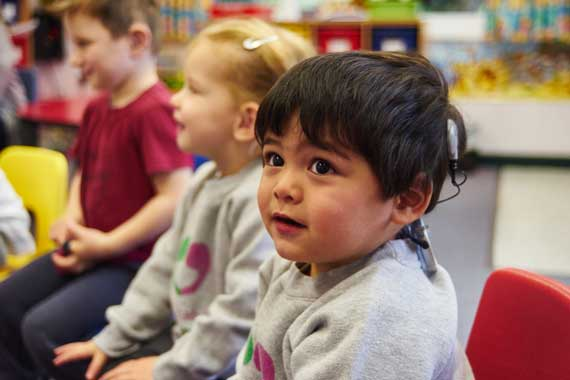
We facilitate early diagnosis for babies and preschool children with all degrees of deafness and provide comprehensive educational and support services for them and their families.
By doing so we enable these children to develop their listening and spoken language skills, as well as build their self-esteem and give parents the confidence and knowledge to make informed decisions on behalf of their child.
“With the Toddler Programme, I’m not feeling lonely or overwhelmed anymore. I’m opening my laptop and I’m feeling support from professionals who understand how it is be the parent of a deaf child. With every lesson, they provide encouragement and have tips and ideas for how to help me to support my baby.
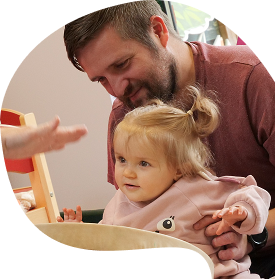
“With the Toddler Programme, I’m not feeling lonely or overwhelmed anymore. I’m opening my laptop and I’m feeling support from professionals who understand how it is be the parent of a deaf child. With every lesson, they provide encouragement and have tips and ideas for how to help me to support my baby.
“With the Toddler Programme, I’m not feeling lonely or overwhelmed anymore. I’m opening my laptop and I’m feeling support from professionals who understand how it is be the parent of a deaf child. With every lesson, they provide encouragement and have tips and ideas for how to help me to support my baby.